Category: News

  • HEFT2026 in Valencia

    I tremendously enjoyed Higgs and Effective Field Theories (#HEFT2026) in the wonderful city of Valencia, hosted in the beautiful setting of the Jardí Botànic: the perfect background for a week of intense discussions on effective field theories and the search for physics beyond the Standard Model:

    https://indico.cern.ch/event/1609241

    EFTs give us a powerful, model-independent way to ask one of the deepest questions in physics: what lies beyond the Standard Model? Rather than betting on any single new-physics scenario, EFTs let us parametrise the possible imprints of heavy new particles in a systematic way, and then confront that framework with data across an enormous range of processes, from the LHC to low-energy precision experiments. It’s a powerful interplay of formal theory, phenomenology, and experiment, and it sits right at the frontier of how we’ll make discoveries in the coming years of particle physics.

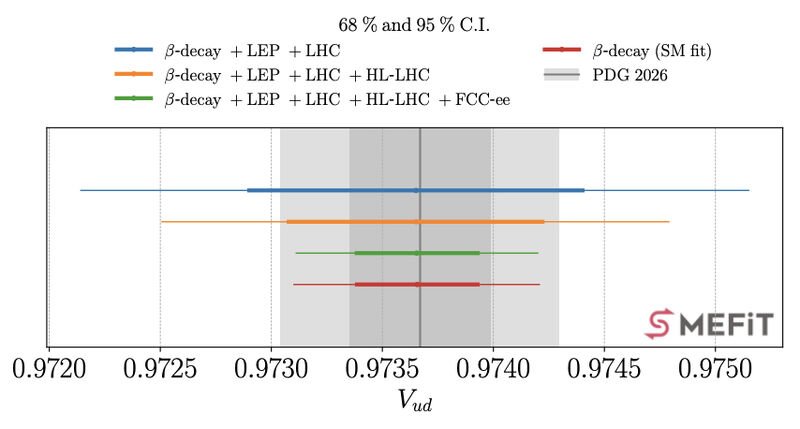
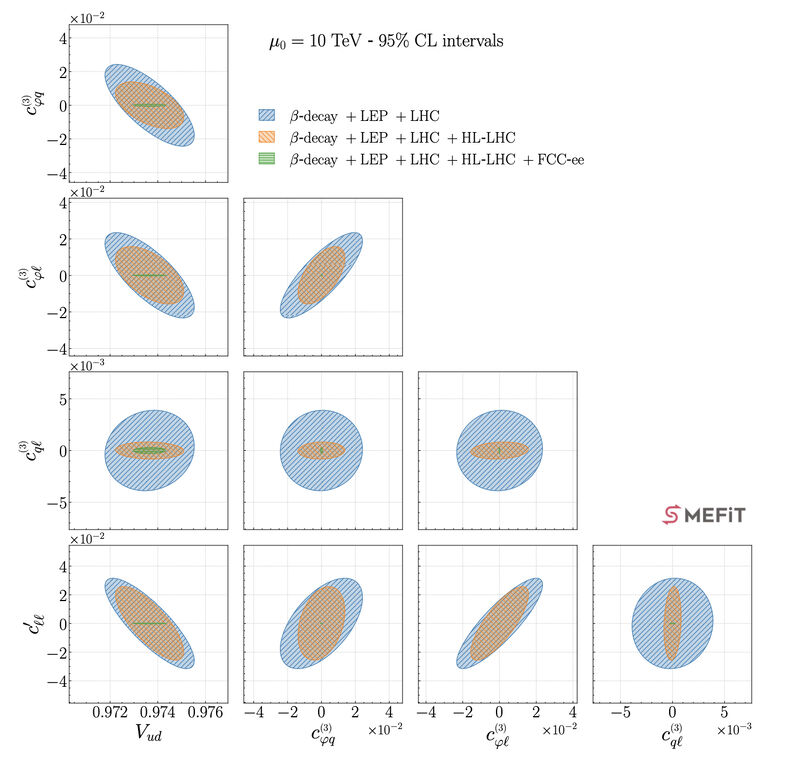
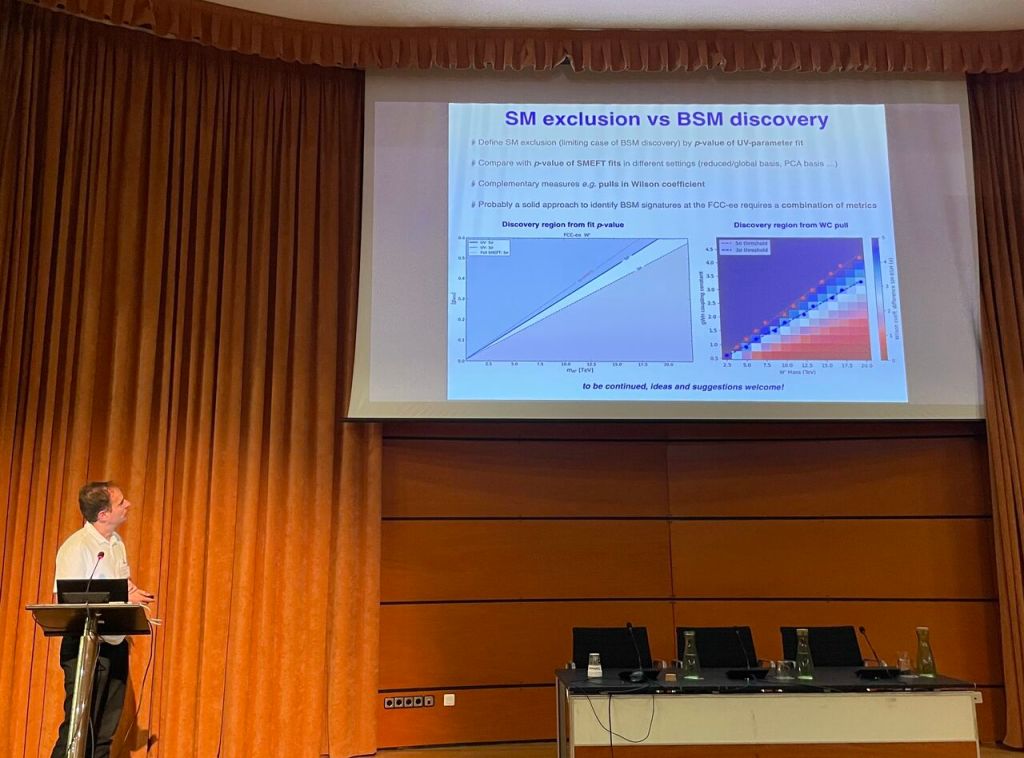
    A lot of fun to present ongoing work with Nikhef (National Institute for Subatomic Physics) and VU Physics and Astronomy colleagues on “The SMEFT as a New Physics Microscope at the FCC-ee“, where the central message is that discovery at a future Higgs and electroweak factory like the Future Circular Collider Study will look nothing like the bump-hunting of the LHC era. New physics will reveal itself as subtle deviations between ultra-precise measurements and equally precise theory predictions. Resolving those signals demands global analysis tools sharp enough to act as a genuine microscope, and that’s where the modern tools such as the #SMEFiT framework come in.

    Many thanks for my collaborators Ilaria Brivio Elie Hammou Kamil Laurent Wopke Telman Jordy de Vries Vaisakh Plakkot Lemonia Gialidi Roan van Brussel for their final push to deliver some cool results in time for HEFT26.

    Beyond the talks themselves, what makes HEFT so valuable is the scientific atmosphere. The programme left real room for discussion over coffee, during the sessions, and well into the evenings, bringing together theorists and phenomenologists from very different backgrounds. These are exactly the conversations where ideas get sharpened and, with a bit of luck (fingers crossed), where new collaborative projects are born.

    cc the many friends and colleagues EFT aficionados Jaco ter Hoeve Alejo Rossia Luca Mantani Admir Greljo Ella Cole Jorge de Blas Raquel Gomez Ambrosio and many others joining the HEFT26 fun!

  • PLANCK2026 at CERN

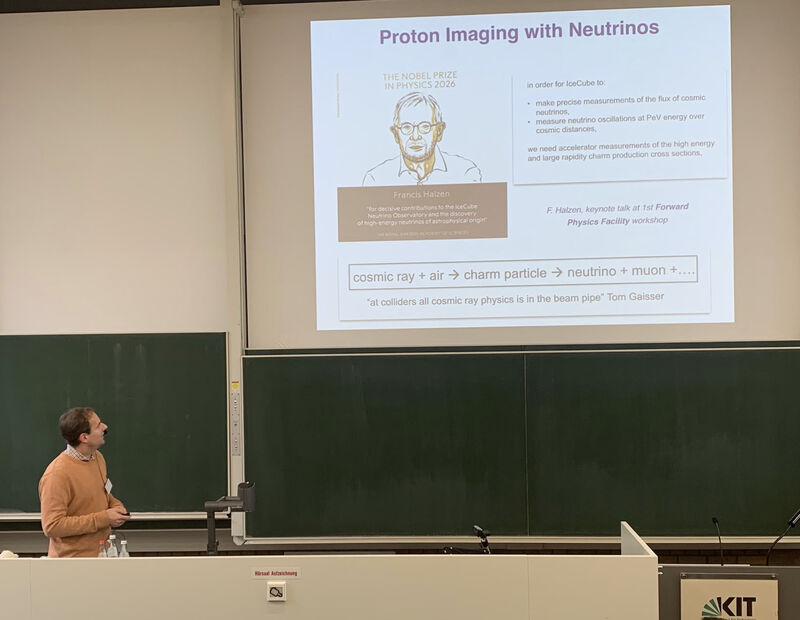
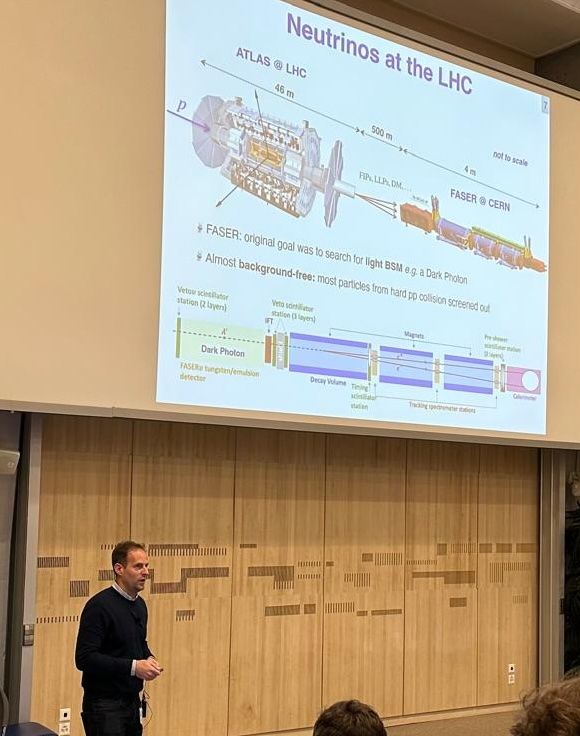
    Following my talk at the Nikhef (National Institute for Subatomic Physics) Neutrino Platform on Tuesday, today I had the privilege of presenting on the same topic, Physics with TeV Neutrinos and Muons from the LHC, at the PLANCK 2026 & 6th EuCAPT Symposium at CERN

    https://indico.cern.ch/event/1552644/

    a joint conference bringing together the high energy physics and astroparticle theory communities. A perfect audience for this topic, and a great opportunity to establish new connections.

    A few highlights that resonated particularly with this audience:

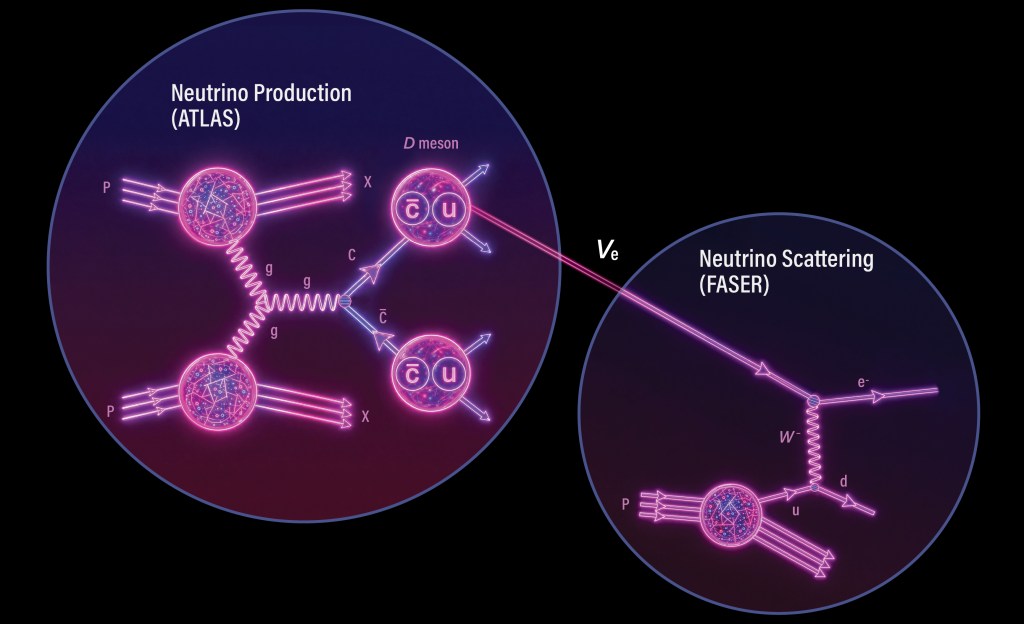
    1) The FASER Experiment was born as a BSM experiment. Its original goal was to search for light dark sector particles: dark photons, feebly-interacting particles (FIPs), long-lived particles (LLPs). Thanks to a new theoretical infrastructure for neutrino production and scattering, we can now extend FASER beyond its original mandate and turn it into a precision QCD microscope

    2) the CERN LHC operating at 7 TeV in the centre-of-mass frame is equivalent to a ~100,000 TeV fixed-target experiment: a direct laboratory counterpart of the ultra-high-energy cosmic ray interactions that experiments like Auger, IceCube, and KM3NeT probe. The recent KM3NeT Neutrino detection of KM3-230213A, the most energetic elementary particle ever detected, makes this connection more urgent than ever. We need reliable QCD modelling of neutrino production and scattering all the way up to 100 PeV, and FASER data can calibrate this.

    3) TeV muons produced at the LHC and reaching FASER are not just a background: they enable muon deep-inelastic scattering in a kinematic regime that overlaps with the future Electron-Ion Collider. In particular, charm production in muon DIS is the ultimate probe of intrinsic quarks in the proton, and with data already on tape, definitive evidence may be within reach with FASER.

    The LHC forward region is a goldmine for particle physics, astroparticle physics, and the search for new phenomena. With the complete Run 3 dataset on tape for FASER, the best is yet to come!

  • New Physics Reach through Precision at Future Colliders: a Multi-Pronged Approach

    Can we discover New Physics through Precision at Future Colliders such as CERN’s Future Circular Collider?

    We can but we need to use a multi-pronged approach, since searching for new physics at the FCC-ee will be very different than at the (HL-)LHC!

    With the European Strategy for Particle Physics 2026 now concluded and the FCC-ee emerging as the preferred candidate for the next major collider, quantifying its physics potential in a rigorous and reproducible way has never been more important. That is exactly what our new paper sets to do:

    https://inspirehep.net/literature/3147037

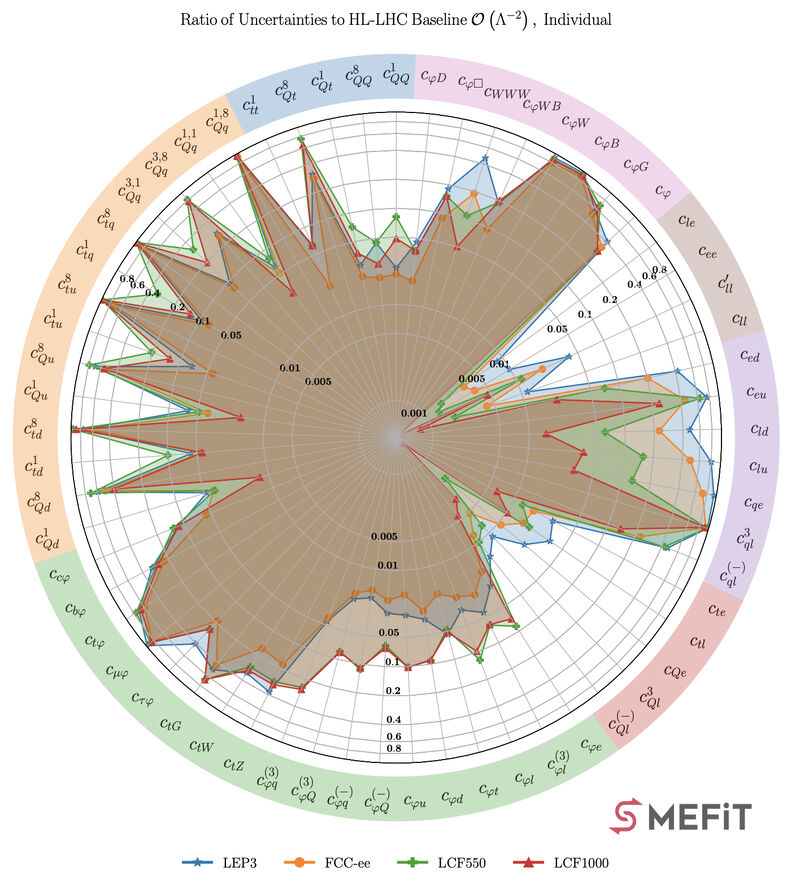
    Together with my amazing #SMEFiT collaborators Tommaso Armadillo, Eugenia Celada, Jaco ter Hoeve Fabio Maltoni Luca Mantani Alejo Rossia Simone Tentori Marion Thomas and Eleni Vryonido, we present a state-of-the-art global analysis of the new physics reach of FCC-ee, benchmarked against other future colliders options such as LEP3 and the Linear Collider Facility. Results in the global SMEFT fit, coupling modifiers, and effective couplings are presented, as well as exclusion bounds for representative UV complete models matched to the SMEFT.

    Along with the physics results, we release an updated version of the open source SMEFiT framework (https://smefit.science/) that allows every result in this paper to be fully reproduced, extended, and customised. Users can add new collider options, observables, or UV models with minimal effort. If you work on future collider phenomenology, this framework may be interesting for you for you!

    The headline physics message: FCC-ee is a uniquely powerful machine for new physics searches, driven by the extraordinary precision of its Tera-Z run and the combination with the 240 and 365 GeV runs through quantum EFT effects.

    A big shout out also to Jorge de Blas for many illuminating discussions about the corresponding HEPfit studies, to CERN Theory Division for their support while part of this work was being carried out, to Nikhef (National Institute for Subatomic Physics) for many exciting discussions on future collider, and to many other colleagues for suggestions and encouragement.

    A milestone for the FCC-ee physics program – laying the groundwork for a new generation of future collider studies.

  • NSBI for Proton Structure

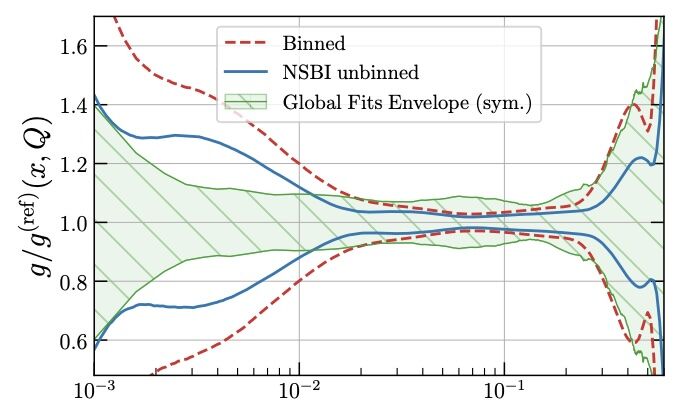
    NSBI for Proton Structure: We present a new approach to determine the proton structure at the LHC using Neural Simulation Based Inference (NSBI), moving beyond traditional analyses based on binned observables.

    Instead of compressing measurements into histograms (and inevitably losing information), we directly exploit the full, high-dimensional structure of collider events. By leveraging AI-driven inference, this allows us to extract PDFs with improved precision and reduced information loss.

    As a proof of concept, we apply this framework to top-quark pair production and demonstrate clear gains over standard (binned, low dimensional) methodologies. In turn, this analysis benefits other gluon-initiated channels, with direct impact on LHC flagship measurements such as Higgs production via gluon fusion, where PDF uncertainties remain a key limiting factor.

    More broadly, our work contributes toward an ongoing shift in collider physics: from binned dimensional observables to fully unbinned, high-dimensional, ML-assisted measurements, unlocking more of the information already present in the data.

    Many thanks for my wonderful collaborators, a real Dream Team of theorists, experimentalists, and ML experts which has worked really hard in the last months to realise a idea which arose during the discussions with Robert Schoefbeck at the last NNPDF Collaboration meeting in Morimondo 2025.

    https://inspirehep.net/literature/3145457