Theoretical Physics · VU Amsterdam · Nikhef
Proton structure, effective field theories, and neutrinos from the LHC to the cosmos through AI
Welcome to my website! I am a Professor of Theoretical Physics in the Physics and Astronomy Department at the Vrije Universiteit (VU) Amsterdam and Group Leader at Nikhef, the Dutch National Institute for High Energy Physics. My research combines theoretical calculations and simulations with advanced machine learning & AI and statistical interpretations of particle physics data to chart the inner structure of the proton, unlock effective field theories for new physics searches, and fingerprint high energy neutrino scattering.
Research
Our group focuses on four core research topics: proton structure, effective field theories, high-energy neutrino interactions, and artificial intelligence for particle physics. The common thread is the deep connection between theory calculations and the interpretation of experimental data, together with state-of-the-art AI methods and statistical techniques.
Proton Structure
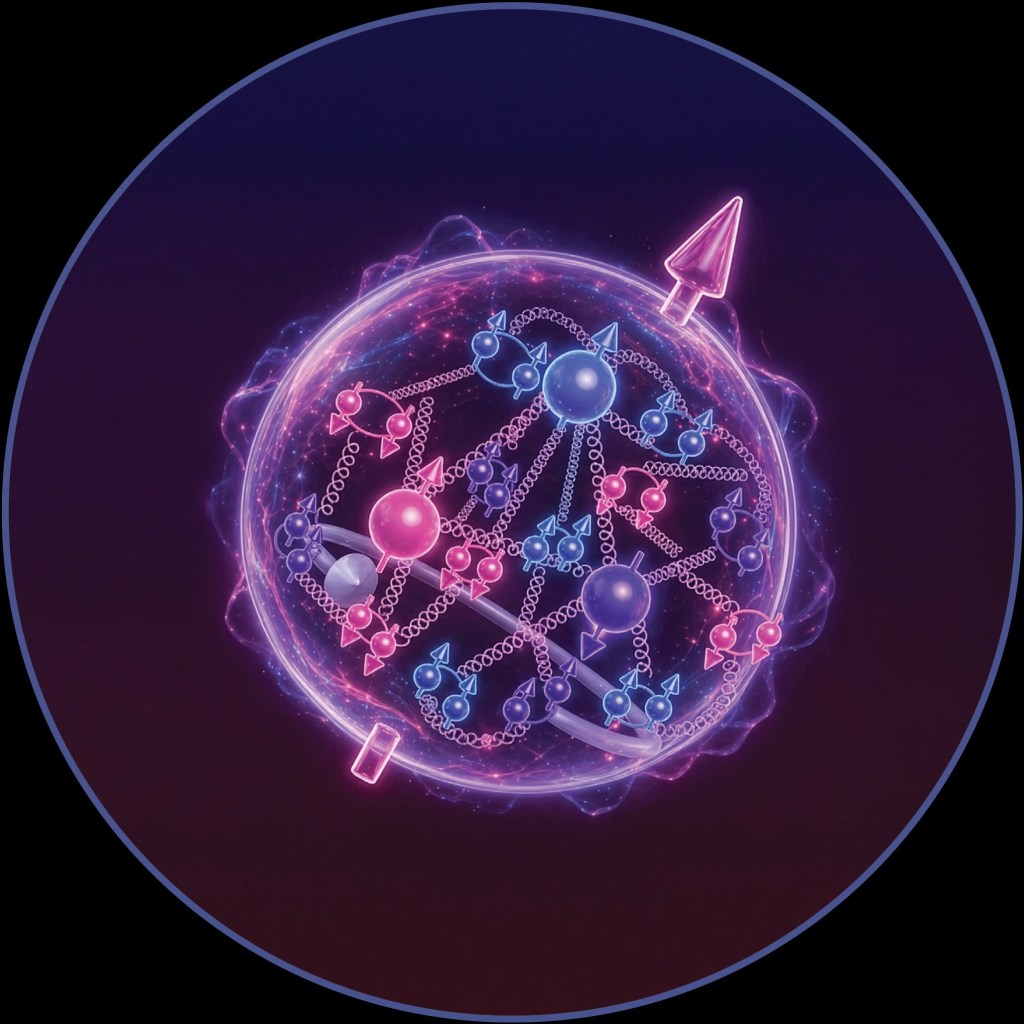
Determining proton structure within the NNPDF methodology: the quantum map of how momentum and spin is shared among quarks and gluons in free nucleons and in heavy nuclei.
Effective Field Theories
Global analyses of the Standard Model Effective Field Theory with SMEFiT, and implications for future high energy colliders.
High-Energy Neutrinos
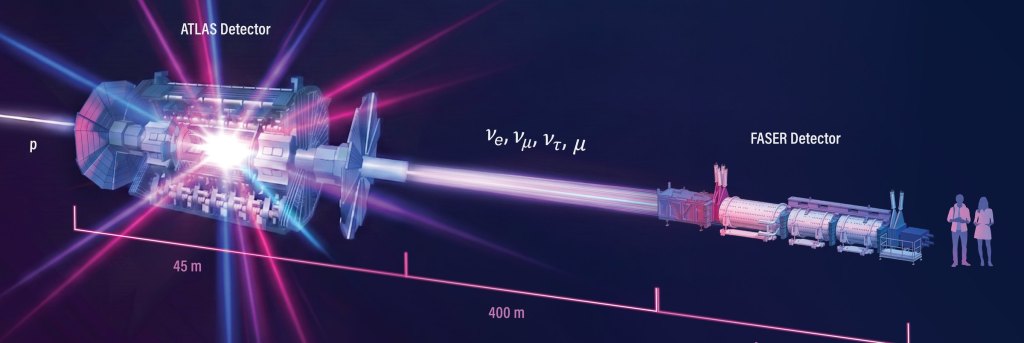
Forward neutrino physics at FASER and SND@LHC and their bridge to ultra-high-energy astroparticle physics at IceCube and KM3NeT.
AI for Particle Physics
Machine learning across the HEP pipeline: deep-learning regression, neural simulation-based inference, hyperparameter optimisation, and unbinned observables at colliders.
Recent News
-
New Directions in Proton Structure talk at HPHP 2026 at KIT
It is always a pleasure to visit the Karlsruhe Institute of Technology (KIT), on this occasion for the 10th International Workshop on High Precision for Hard Processes at the LHC (HP2 2026), one of the main venues for scientific exchange among experts in precision, multi-loop and multi-leg calculations in Quantum…
-
From nuclear beta decays to the FCC-ee: disentangling Vud from New Physics
What does CERN’s proposed future flagship collider have to do with nuclear physics? At first sight, nothing at all. Yet Quantum Field Theory tells us otherwise: low-energy observables such as the beta decays of radioactive nuclei, involving momentum transfers of a few MeV, are intrinsically linked through quantum effects to…
-
A New Social Contract in the genAI Era?
One of the best things about the yearly NNPDF Collaboration meeting is catching up with friends and colleagues, and if my PhD supervisor José Ignacio Latorre is around, this can only mean really exciting stuff. José Ignacio is a true modern-day polymath: from particle physics to quantum information, from founding…
-
NNPDF Collaboration meeting – Morimondo 2027
Another successful and productive edition of the yearly NNPDF Collaboration meeting in Milano has just wrapped up. Over three days we discussed cutting-edge perturbative calculations; the intricacies of the recent precision measurements from ATLAS, CMS, LHCb and ALICE, which will be used in our upcoming global determination of proton structure;…
See here for the complete set of News →
The research group
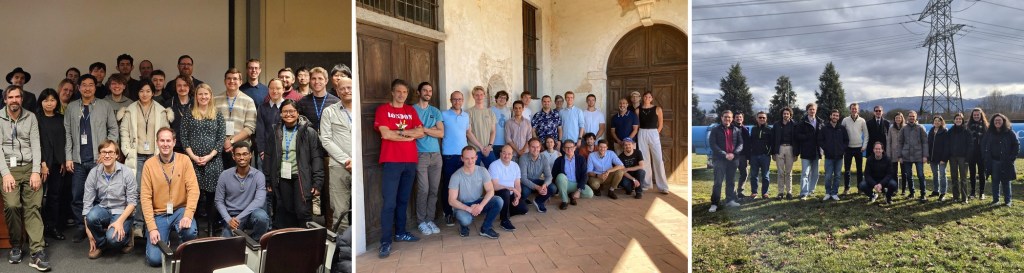
My research group at the VU Amsterdam and the Nikhef Theory Program working across QCD, proton structure, effective field theories, high energy neutrinos, and applications of ML & AI for particle physics. Our research efforts are partially embedded in a number of collaborations including the NNPDF Collaboration for proton structure studies, the SMEFiT collaborations for global analyses of effective field theories, and the FASER Collaboration for measurements and interpretation of high energy neutrinos.